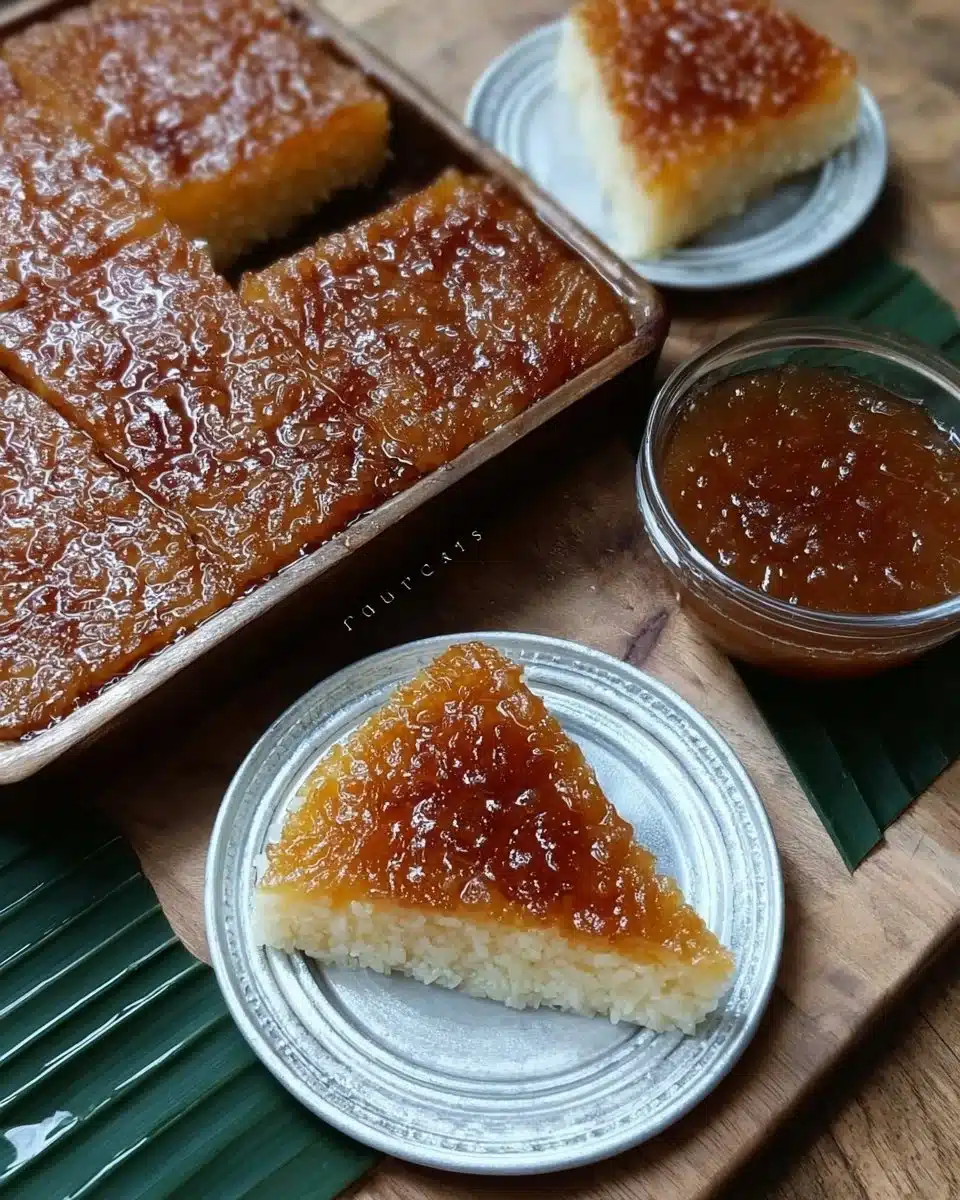
Sticky Rice Cake (Bibingkang Malagkit): A Filipino Delight
Bibingkang Malagkit, or Sticky Rice Cake, is a beloved Filipino dessert that brings a unique and delightful flavor to your table. This dish is not just a treat; it’s a celebration of Filipino culture, loved for its rich coconut flavor and chewy texture.
Why Make This Recipe
Making Bibingkang Malagkit is not only about indulging in a delicious treat; it’s also about cherishing traditions. This dessert is often served during special occasions and festivities, making it a staple at birthday parties, holidays, and family gatherings. Its warm, comforting texture and subtly sweet flavor evoke nostalgia for many, reminding them of home and family. Plus, it’s a fantastic way to showcase the delightful ingredient of glutinous rice, which is a key component in many Asian cuisines.
How to Make Sticky Rice Cake (Bibingkang Malagkit)
Creating your own Bibingkang Malagkit at home is quite simple and straightforward. Below are the ingredients and steps required to prepare this delightful treat.
Ingredients:
- 5 cups glutinous rice (also known as malagkit rice)
- 4 cups water
- Pandan leaves (for flavor)
- 1 tablespoon oil
- 5 cups coconut milk (2nd extract)
- 1 & 1/3 cups white sugar
- A pinch of salt
- 4 cups coconut milk (1st extract)
- 1 & 1/3 cups brown sugar
- 1/2 sliced sugarcane (known as panutsa)
Directions:
- Start by washing the glutinous rice twice to remove excess starch and ensure a perfect texture. Drain the rice thoroughly.
- In a large pot, combine the rinsed rice with water, oil, and pandan leaves. Cook this mixture until the liquid dries up, ensuring the rice absorbs all the flavors.
- Next, pour in the second extract of coconut milk, add additional pandan leaves, a pinch of salt, and white sugar. Mix well to dissolve the sugar and bring to a gentle boil over medium heat.
- Add the previously cooked glutinous rice to the pot, stirring continuously as the coconut milk is absorbed into the rice mixture.
- Preheat your oven to 180°C (about 350°F). Grease a baking pan with butter or margarine and transfer the glutinous rice mixture into it. Flatten it evenly in the pan.
- For the sauce, combine the first extract of coconut milk and brown sugar in a separate pan. Stir until the mixture dissolves and cook for about 10 minutes.
- Add the sliced sugarcane to the sauce, stirring until the sugarcane dissolves. Continue cooking until the sauce thickens.
- Pour this rich sauce over the flattened glutinous rice mixture and place it in the preheated oven. Bake for 40 minutes or more until golden brown on top.
- Allow it to cool before serving and enjoy a delicious slice of Bibingkang Malagkit!
![image_2]
Pro Tips for Success with Sticky Rice Cake
- Quality of Rice: Use good quality glutinous rice to achieve the perfect sticky texture. Look for rice labeled as "malagkit" or "sweet rice."
- Coconut Milk: For the best flavor, opt for fresh coconut milk if available. If using canned coconut milk, make sure to shake it well before opening.
- Avoid Overcooking: Be careful not to overcook the rice mixture initially; you want it to be chewy, not mushy.
- Testing the Sauce: While making the sauce, keep an eye on the thickness. You want it to be pourable but thick enough to coat the rice properly.
- Baking Tips: If you notice the top is browning too quickly, you can loosely cover it with aluminum foil to prevent burning.
- Serving Temperature: Bibingkang Malagkit can be enjoyed warm or at room temperature, making it a versatile dessert.
Flavor Variations of Sticky Rice Cake
While the classic version is divine, here are a few ideas to mix things up a bit:
- Mango Twist: Serve slices of Bibingkang Malagkit with fresh mango on the side for a fruity kick.
- Cheese Topping: Sprinkle grated cheese on top before baking for a sweet and salty combination.
- Ube Variation: Incorporate ube (purple yam) into the rice mixture for a vibrant color and unique flavor.
- Chocolate Drizzle: Add chocolate syrup as a drizzle on top after baking for a luxurious touch.
- Nutty Flavor: Mix in finely chopped nuts, such as peanuts or cashews, to add some crunch to your sticky rice cake.
Serving Suggestions for Sticky Rice Cake
Sticky Rice Cake is a versatile dessert that can be served in various ways. Here are some suggestions:
- Celebration Dish: Serve as a centerpiece at Filipino celebrations like birthdays, fiestas, or Christmas.
- Snack Time: Enjoy it as a sweet tea-time treat paired with a cup of coffee or hot chocolate.
- After Meal Dessert: It works wonderfully as a sweet conclusion to any meal, especially when served warm.
- Party Treats: Cut into small squares for easy serving at gatherings, making it great finger food for guests.
Storage and Freezing Instructions for Sticky Rice Cake
Storing and preserving your Bibingkang Malagkit is essential to maintain its delicious texture:
- Room Temperature: If you plan to eat it within a couple of days, store the cake in an airtight container at room temperature.
- Refrigeration: For longer storage, keep it in the refrigerator for up to a week. Just ensure it’s well-wrapped to prevent it from drying out.
- Freezing: If you want to keep it for more than a week, Bibingkang Malagkit freezes well. Cut it into slices, wrap each piece tightly in plastic wrap, and store in a freezer-safe container. It can last for up to three months. Thaw in the fridge before reheating.
Nutrition Facts (Per Serving)
| Nutrient | Amount |
|—————|—————–|
| Calories | 300 |
| Protein | 3g |
| Carbohydrates | 60g |
| Fat | 10g |
| Fiber | 2g |
| Sodium | 50mg |
FAQ About Sticky Rice Cake (Bibingkang Malagkit)
What is Bibingkang Malagkit?
Bibingkang Malagkit is a traditional Filipino sticky rice cake made primarily from glutinous rice, coconut milk, and sugar. It is popular for its chewy texture and rich coconut flavor, often enjoyed during special occasions and gatherings.
Can I use regular rice instead of glutinous rice?
No, glutinous rice is crucial for achieving the distinctive sticky and chewy texture that defines Bibingkang Malagkit. Regular rice won’t produce the same result, so be sure to use glutinous rice for the best outcome.
How do I know if my sticky rice cake is perfectly cooked?
The cake should have a firm, sticky texture without being dry or mushy. A perfect Bibingkang Malagkit is chewy and holds together well when sliced. If it’s too wet or soggy, it may need longer cooking time or could indicate too much liquid was used.
Can I make Bibingkang Malagkit vegan?
Yes! The recipe is already dairy-free since it mainly uses coconut milk. Just ensure that any sugar used is not processed with bone char if you want to keep it entirely vegan.
How do I reheat leftover Sticky Rice Cake?
You can reheat Bibingkang Malagkit in the microwave for convenience, or warm it in the oven. Just make sure to cover it with foil to prevent it from drying out.
Final Thoughts
Bibingkang Malagkit is a delightful treat that not only satisfies your sweet cravings but also connects you with Filipino culture. Its rich, velvety textures, combined with the unique flavors of coconut and sugarcane, create a dessert experience that’s hard to resist. Whether you’re making it for a celebration or just to enjoy a taste of home, this sticky rice cake is sure to please everyone at your table. So gather your ingredients, and get ready to whip up this delicious delicacy!
Print
Sticky Rice Cake (Bibingkang Malagkit)
- Total Time: 80 minutes
- Yield: 12 servings
- Diet: Vegetarian
Description
Bibingkang Malagkit is a beloved Filipino dessert featuring glutinous rice, rich coconut milk, and a sweet silky sauce, perfect for celebrations.
Ingredients
- 5 cups glutinous rice (also known as malagkit rice)
- 4 cups water
- Pandan leaves (for flavor)
- 1 tablespoon oil
- 5 cups coconut milk (2nd extract)
- 1 & 1/3 cups white sugar
- A pinch of salt
- 4 cups coconut milk (1st extract)
- 1 & 1/3 cups brown sugar
- 1/2 sliced sugarcane (known as panutsa)
Instructions
- Wash the glutinous rice twice to remove excess starch and drain it thoroughly.
- In a large pot, combine the rinsed rice with water, oil, and pandan leaves. Cook until the liquid dries up, allowing the rice to absorb the flavors.
- Pour in the second extract of coconut milk, add additional pandan leaves, a pinch of salt, and white sugar. Mix well and bring to a gentle boil over medium heat.
- Add the cooked glutinous rice to the pot, stirring as the coconut milk is absorbed into the mixture.
- Preheat the oven to 180°C (about 350°F). Grease a baking pan and transfer the mixture into it, flattening it evenly.
- For the sauce, combine the first extract of coconut milk and brown sugar in a separate pan. Cook for about 10 minutes until dissolved and thickened.
- Add the sliced sugarcane to the sauce, stirring until it dissolves and thickens.
- Pour the sauce over the flattened rice mixture and bake for 40 minutes or until golden brown on top.
- Allow to cool before serving.
Notes
For best results, use quality glutinous rice and fresh coconut milk. Store in an airtight container at room temperature for up to two days, or refrigerate for longer storage.
- Prep Time: 30 minutes
- Cook Time: 50 minutes
- Category: Dessert
- Method: Baking
- Cuisine: Filipino