
Palitaw in Coconut Cream | Sweet Flat Rice Cake
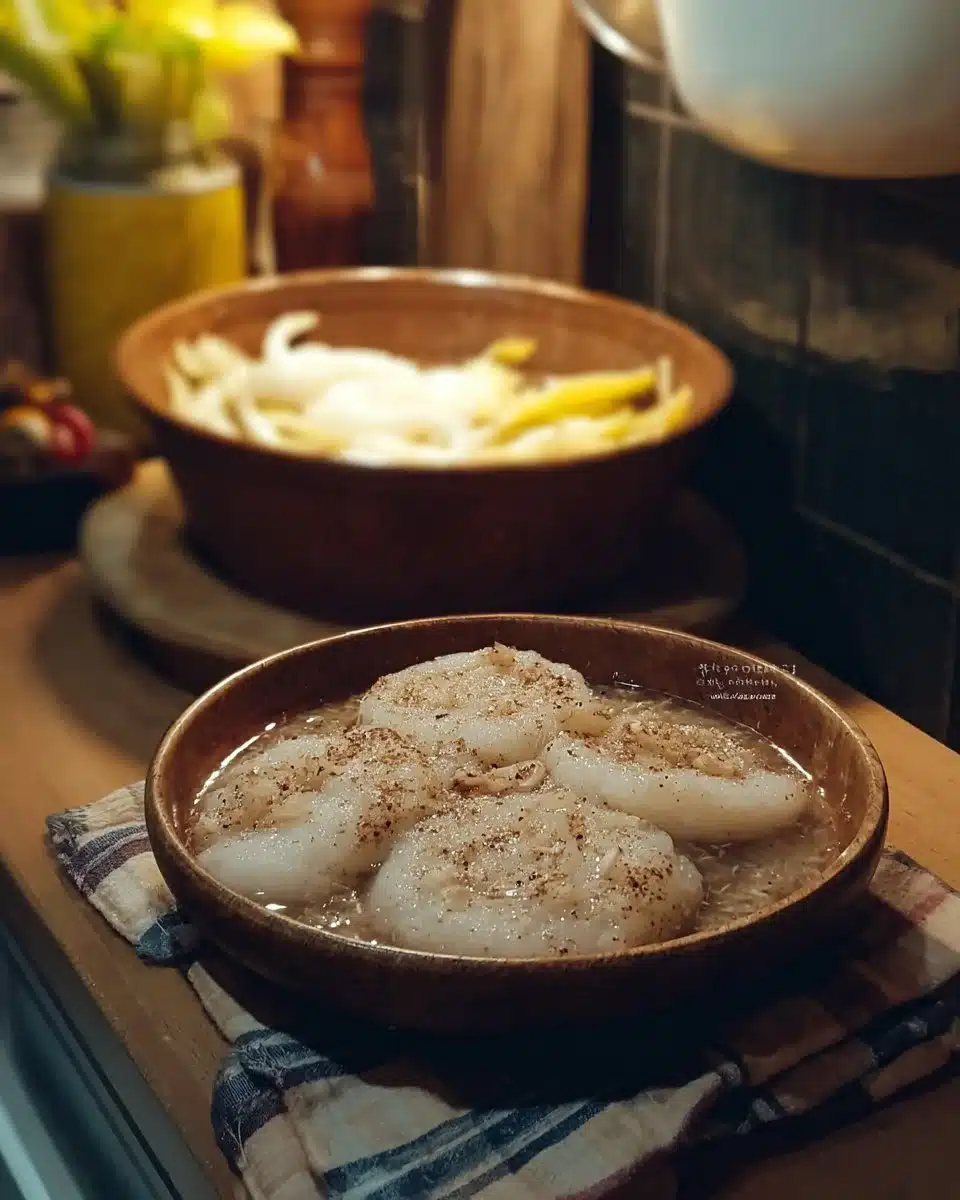
Palitaw in Coconut Cream is a delightful Filipino delicacy that marries the chewy goodness of glutinous rice cakes with the creamy richness of coconut. This sweet treat is not just a snack; it evokes childhood memories for many Filipinos and has become a beloved dish in various households. Let’s dive into why you should consider making this sweet flat rice cake and how to prepare it at home.
Why Make This Recipe
Making Palitaw in Coconut Cream is a wonderful way to connect with Filipino culture and indulge in a unique dessert that is both satisfying and simple to prepare. The contrast between the sticky rice cake and the smooth coconut cream is a taste sensation that’s hard to resist. Plus, it’s an ideal treat for gatherings, celebrations, or simply to enjoy with family and friends at home. The addition of jackfruit and sesame seeds provides delightful textures and flavors, elevating this dish beyond your typical rice cake.
How to Make Palitaw in Coconut Cream
Creating Palitaw in Coconut Cream involves a few straightforward steps, and the ingredients come together beautifully to make an unforgettable dessert. Below, you will find the necessary ingredients and detailed directions for preparing this delicious sweet flat rice cake.
Ingredients
- 4 cups glutinous rice flour
- 1 1/2 cups water
- 1/8 cup sesame seeds
- 3 cups coconut milk
- 3/4 cup sugar
- Jackfruit strips
Directions
- Begin by placing the glutinous rice flour in a mixing bowl. Gradually add the water, kneading the mixture until it becomes a smooth dough.
- After kneading, form the dough into a ball and flatten it slightly to create small disks.
- In a dry pan, toast the sesame seeds over medium heat. Stir frequently until they turn golden brown. Remove them from the pan, let them cool, and then crush them lightly. Set aside.
- In a separate pan, heat the coconut milk over medium to high heat. Once it starts boiling, add the jackfruit strips and sugar. Stir the mixture continuously until the coconut milk thickens slightly.
- Carefully drop the flattened dough disks into the boiling coconut mixture. When they float to the surface, this indicates they are cooked through.
- For additional flavor, sprinkle with crushed sesame seeds and a pinch of salt. Allow it to simmer for about two more minutes.
- Once finished, transfer the Palitaw to a serving bowl and enjoy!
Pro Tips for Success with Palitaw in Coconut Cream
- Use Fresh Ingredients: Fresh jackfruit and coconut milk will enhance the overall flavor of the dish. If fresh jackfruit is unavailable, canned versions can be used as substitutes.
- Kneading Technique: Knead the rice flour and water thoroughly to create a smooth dough, which will yield a better texture for the Palitaw.
- Don’t Overcook: While boiling the dough, watch closely for them to float; overcooking can lead to a mushy texture.
- Adjust Sweetness: If you prefer a sweeter treat, feel free to adjust the amount of sugar in the coconut milk mixture according to your taste.
- Serving Warm: Palitaw is best served warm, right after making, as the flavors and textures are at their peak.
- Experiment with Toppings: Try adding additional toppings, like grated coconut or diced fruits, to customize your dish.
Flavor Variations for Palitaw in Coconut Cream
- Maui-style Palitaw: Add a touch of pandan extract to the dough for a fragrant twist.
- Ube Twist: Incorporate ube (purple yam) into the dough for a colorful variation.
- Chocolate Drizzle: Drizzle melted dark chocolate over the finished Palitaw for a decadent touch.
- Fruit Toppings: Top with other seasonal fruits like mango or banana for added sweetness and color.
- Reduced Sugar Option: Replace sugar with alternative sweeteners like honey or agave syrup for a healthier option.
Serving Suggestions for Palitaw in Coconut Cream
Palitaw in Coconut Cream is incredibly versatile. You can enjoy it as a simple snack or serve it at parties and gatherings. Here are a few serving suggestions:
- Serve with a hot cup of tea or coffee to complement the sweetness.
- Present it on a platter with tropical fruits for a beautiful and colorful dessert display.
- Pair with a side of fresh fruit salad for a refreshing contrast of flavors.
- Add a scoop of ice cream for a delightful fusion of temperatures and textures.
Storage and Freezing Instructions for Palitaw in Coconut Cream
For best results, it’s advisable to enjoy Palitaw fresh. However, if you have leftovers, here’s how to store them:
- Refrigeration: Place any uneaten Palitaw in an airtight container in the refrigerator. It can last for up to three days.
- Freezing: If you wish to store them longer, freeze the Palitaw after they have cooled completely. Wrap individual pieces tightly in plastic wrap and place them in a freezer-safe bag. They can last up to two months in the freezer.
- Reheating: When ready to eat, thaw the frozen Palitaw in the refrigerator overnight. Reheat in a pan with a bit of coconut milk to restore their original texture and flavor.
Nutrition Facts (Per Serving)
| Nutrient | Amount |
|————|————-|
| Calories | 210 |
| Protein | 3g |
| Carbohydrates | 34g |
| Fat | 8g |
| Fiber | 1g |
| Sodium | 10mg |
FAQ About Palitaw in Coconut Cream
What is Palitaw?
Palitaw is a traditional Filipino rice cake made from glutinous rice flour and water. It is typically boiled until it floats and often topped with various sweet toppings and sauces, such as coconut cream.
Can I use other types of flour for this recipe?
While glutinous rice flour is key to achieving the chewy texture characteristic of Palitaw, experimenting with other flours (like regular rice flour) may alter the taste and texture but can also yield interesting results. It’s best to use glutinous rice flour for an authentic experience.
Is Palitaw gluten-free?
Yes! Palitaw is gluten-free, as it is made primarily with glutinous rice flour, making it a suitable option for those with gluten intolerance or celiac disease.
How do I know when the Palitaw is cooked?
Once the flattened dough pieces float in the boiling coconut milk, they are fully cooked. This floating indicates that they have become light and airy inside.
Can I make Palitaw without coconut milk?
Yes! If you’re looking for a lighter version, you could try using almond milk or another milk of choice, but this will alter the flavor profile significantly.
What other toppings can I use with Palitaw?
Aside from crushed sesame seeds, you can try using grated coconut, chopped nuts, or even a drizzle of caramel or fruit syrup to give additional sweetness and texture to your Palitaw.
Final Thoughts
Palitaw in Coconut Cream is more than just a dessert; it’s a piece of cultural history and a delicious way to celebrate flavors. With its chewy texture, sweet coconut sauce, and various topping possibilities, it’s guaranteed to delight anyone who tries it. You don’t have to be a master chef to make this treat, and the joy it brings to the table makes it all the more worthwhile. So gather your ingredients, roll up your sleeves, and let’s make this sweet flat rice cake together!
Print
Palitaw in Coconut Cream
- Total Time: 45 minutes
- Yield: 4 servings
- Diet: Gluten-Free, Vegetarian
Description
A delightful Filipino delicacy of chewy glutinous rice cakes topped with creamy coconut and sesame seeds.
Ingredients
- 4 cups glutinous rice flour
- 1 1/2 cups water
- 1/8 cup sesame seeds
- 3 cups coconut milk
- 3/4 cup sugar
- Jackfruit strips
Instructions
- Place glutinous rice flour in a mixing bowl. Gradually add water, kneading until smooth.
- Form the dough into small disks.
- Toast sesame seeds in a dry pan over medium heat until golden brown, then crush lightly and set aside.
- Heat coconut milk in a separate pan over medium to high heat. Once boiling, add jackfruit strips and sugar, stirring until thickened.
- Drop dough disks into the boiling coconut mixture. When they float, they are cooked through.
- Sprinkle with crushed sesame seeds and simmer for 2 more minutes.
- Transfer to a serving bowl and enjoy!
Notes
Serve warm for the best flavor and texture. Experiment with toppings like grated coconut or fruits.
- Prep Time: 15 minutes
- Cook Time: 30 minutes
- Category: Dessert
- Method: Boiling
- Cuisine: Filipino