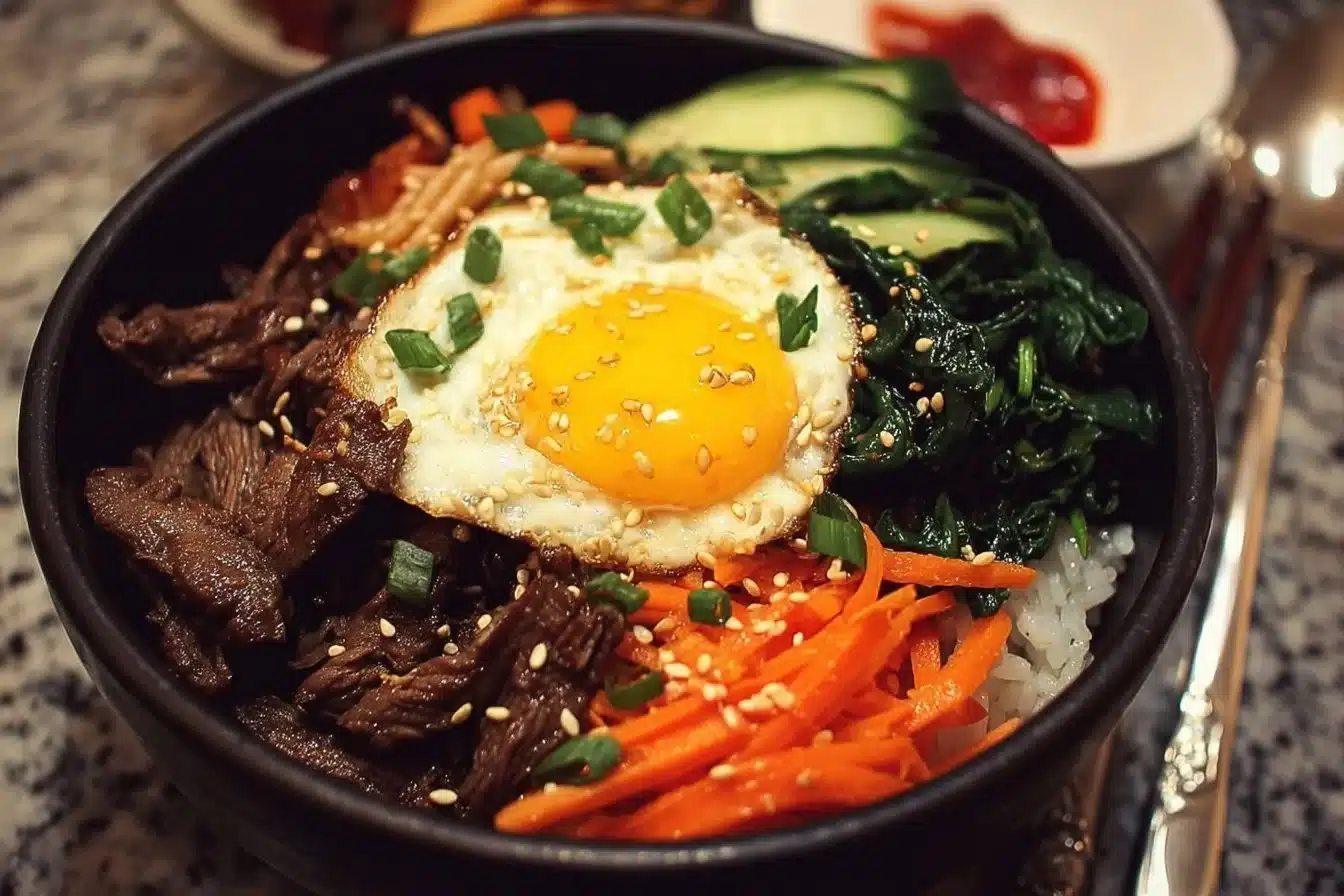
Korean Beef Bibimbap Bowl
Korean Beef Bibimbap Bowl is a delightful dish that combines a variety of flavors and textures into one satisfying meal. This vibrant bowl is not only aesthetic but also a healthy choice, making it perfect for any day of the week. If you’re looking for a delicious way to enjoy nutritious ingredients, this recipe is for you!
Why Make This Recipe
Bibimbap is a Korean term that means “mixed rice,” and it’s truly a celebration of many different ingredients coming together harmoniously. Making this Korean Beef Bibimbap Bowl at home allows you to customize it to your preferences while embracing a rich cultural heritage. The blend of seasoned beef, fresh vegetables, and a perfectly fried egg topped with spicy gochujang sauce creates an explosion of flavor. Moreover, bibimbap is not only filling but also nutritious, packed with protein, vitamins, and minerals.
Whether you’re trying to eat healthier, introduce new flavors into your meals, or just want to impress family and friends with your cooking skills, this Korean Beef Bibimbap Bowl is the perfect recipe to try!
How to Make Korean Beef Bibimbap Bowl
Ingredients:
- 1 lb lean ground beef
- 2 cups short-grain white rice (cooked)
- 1 cup carrots (julienned)
- 1 cup spinach (fresh)
- 1 cup zucchini (sliced)
- 1 cup bean sprouts
- 3 tbsp gochujang sauce (adjust for spice level)
- 1 tbsp sesame oil
- 2 tbsp low-sodium soy sauce
- 4 eggs
Directions:
- Cook the rice according to package instructions; set aside.
- In a skillet, brown ground beef over medium-high heat for about 5-7 minutes, draining excess fat.
- Stir in gochujang, soy sauce, and sesame oil; let it simmer on low for 5 minutes.
- Sauté the vegetables in sesame oil over medium heat until tender-crisp, which takes about 7 minutes.
- Fry the eggs sunny-side up until the whites are set but the yolks are runny, about 3 minutes.
- Assemble bowls by layering the rice, beef mixture, sautéed vegetables, and topping with a fried egg. Drizzle with additional gochujang if desired.
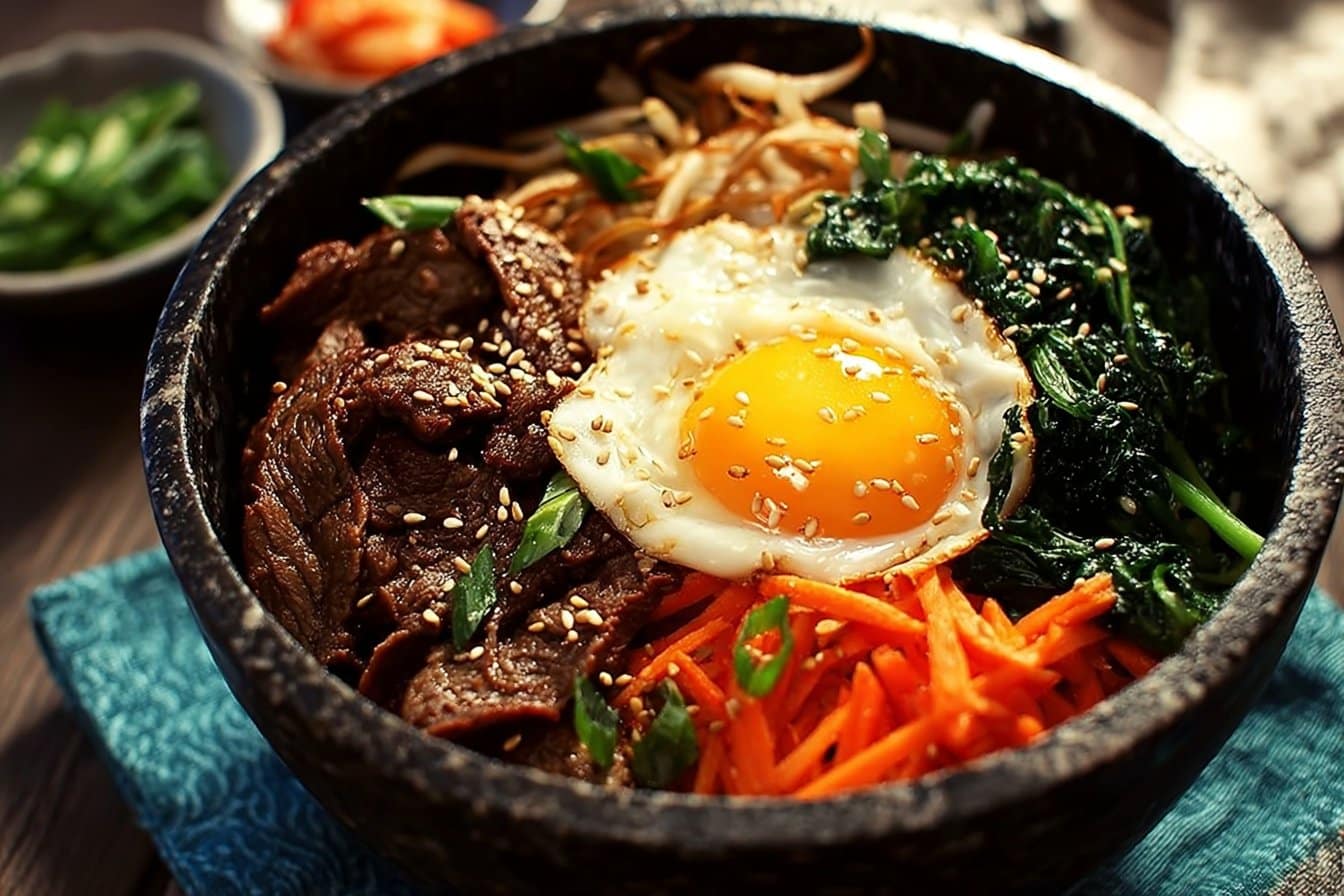
Pro Tips for Success with Korean Beef Bibimbap Bowl
- Choose Quality Ingredients: Opt for fresh produce and high-quality beef for the best taste and nutritional value.
- Adjust Spice Levels: If you’re not a fan of too much heat, start with 1 tablespoon of gochujang and adjust to your liking.
- Prep Ahead: Chop the vegetables in advance, so when you’re ready to cook, everything is at your fingertips for a quicker assembly.
- Experiment with Toppings: Feel free to add additional toppings such as sliced radishes, kimchi, or sesame seeds for added flavor and texture.
- Use a Non-Stick Pan: This will help prevent the eggs from sticking and make cleanup a breeze.
- Cook Rice Correctly: Ensuring your rice is well-cooked and slightly sticky will help bind the ingredients together when you mix everything in your bowl.
Flavor Variations for Korean Beef Bibimbap Bowl
- Vegetarian Version: Replace ground beef with sautéed mushrooms, tofu, or lentils for a meat-free option.
- Add Kimchi: For an extra kick of flavor, serve with a side of kimchi to enhance the traditional Korean taste.
- Flavorful Broth: Instead of soy sauce, try adding a splash of beef or vegetable broth to your beef mixture for added depth.
- Crispy Won Tons: Top with crispy won ton strips for a unique crunch.
- Different Proteins: Try using chicken or turkey ground meat instead of beef for a different flavor profile.
Serving Suggestions for Korean Beef Bibimbap Bowl
Korean Beef Bibimbap is best served immediately after assembling for a fresh and warm experience. Consider pairing it with:
- A side of pickled vegetables or kimchi for acidity
- Korean-style pancakes (pajeon) for a filling meal
- A refreshing cucumber salad to balance the heat of the dish
- Cold tea like barley tea for a traditional beverage pairing
Storage and Freezing Instructions for Korean Beef Bibimbap Bowl
For any leftovers, you can store the components separately in airtight containers in the refrigerator. The cooked rice and beef mixture will last for up to 3 days. The cooked vegetables and fried eggs can also be stored, though they are best consumed fresh.
If you want to freeze the beef mixture, cool it completely, then pack it in a freezer bag. It can last up to 3 months in the freezer. When ready to eat, simply thaw in the refrigerator overnight, reheat it in a pan, and serve over fresh rice.
Nutrition Facts (Per Serving)
| Nutrient | Amount |
|———–|————-|
| Calories | 600 |
| Protein | 30g |
| Carbs | 70g |
| Fat | 20g |
| Fiber | 5g |
| Sodium | 500mg |
FAQ About Korean Beef Bibimbap Bowl
What can I substitute for gochujang?
If you don’t have gochujang, you can substitute with red chili paste mixed with a bit of vinegar and sugar to replicate the sweet and spicy flavor. However, this may change the flavor slightly compared to traditional bibimbap.
Can I make bibimbap bowl vegan?
Absolutely! You can create a vegan version by replacing beef with tofu or tempeh and using soy sauce or a plant-based alternative. The eggs can be omitted or replaced with vegan alternatives such as scrambled tofu.
How do I ensure my eggs are perfectly cooked?
Frying the eggs sunny-side up requires a gentle touch. Ensure the pan is not too hot, and cook for about 2-3 minutes. You can cover with a lid to ensure the whites set nicely while keeping yolks runny.
Can I use brown rice instead of white rice?
Yes! While traditional bibimbap uses short-grain white rice, you can easily opt for brown rice as a healthier alternative. Just remember that the cooking time may differ, so adjust accordingly.
What’s the best way to mix the ingredients in the bowl?
After assembling all ingredients, you can drizzle some more gochujang and sesame oil on top. Then, mix all the components thoroughly until evenly combined. This helps distribute flavors throughout the dish.
Final Thoughts
Korean Beef Bibimbap Bowl is a vibrant, nutritious dish that is both satisfying and customizable. With its colorful vegetables, seasoned beef, and rich flavors, it’s a meal that the whole family will love. This recipe not only brings a taste of Korea to your kitchen but also allows you to tailor it to meet your individual tastes and dietary needs. Enjoy the process of creating this beautiful bowl, and don’t forget to share your delicious results with friends and family!
Print
Korean Beef Bibimbap Bowl
- Total Time: 45 minutes
- Yield: 4 servings
- Diet: Gluten-Free
Description
A delightful dish that combines flavors and textures into one satisfying meal, featuring seasoned beef, fresh vegetables, and a fried egg topped with spicy gochujang sauce.
Ingredients
- 1 lb lean ground beef
- 2 cups short-grain white rice (cooked)
- 1 cup carrots (julienned)
- 1 cup spinach (fresh)
- 1 cup zucchini (sliced)
- 1 cup bean sprouts
- 3 tbsp gochujang sauce (adjust for spice level)
- 1 tbsp sesame oil
- 2 tbsp low-sodium soy sauce
- 4 eggs
Instructions
- Cook the rice according to package instructions; set aside.
- In a skillet, brown ground beef over medium-high heat for about 5-7 minutes, draining excess fat.
- Stir in gochujang, soy sauce, and sesame oil; let it simmer on low for 5 minutes.
- Sauté the vegetables in sesame oil over medium heat until tender-crisp, which takes about 7 minutes.
- Fry the eggs sunny-side up until the whites are set but the yolks are runny, about 3 minutes.
- Assemble bowls by layering the rice, beef mixture, sautéed vegetables, and topping with a fried egg. Drizzle with additional gochujang if desired.
Notes
Choose quality ingredients for the best taste; feel free to experiment with toppings like sliced radishes or kimchi.
- Prep Time: 15 minutes
- Cook Time: 30 minutes
- Category: Main Course
- Method: Stovetop
- Cuisine: Korean
1 thought on “Korean Beef Bibimbap Bowl”