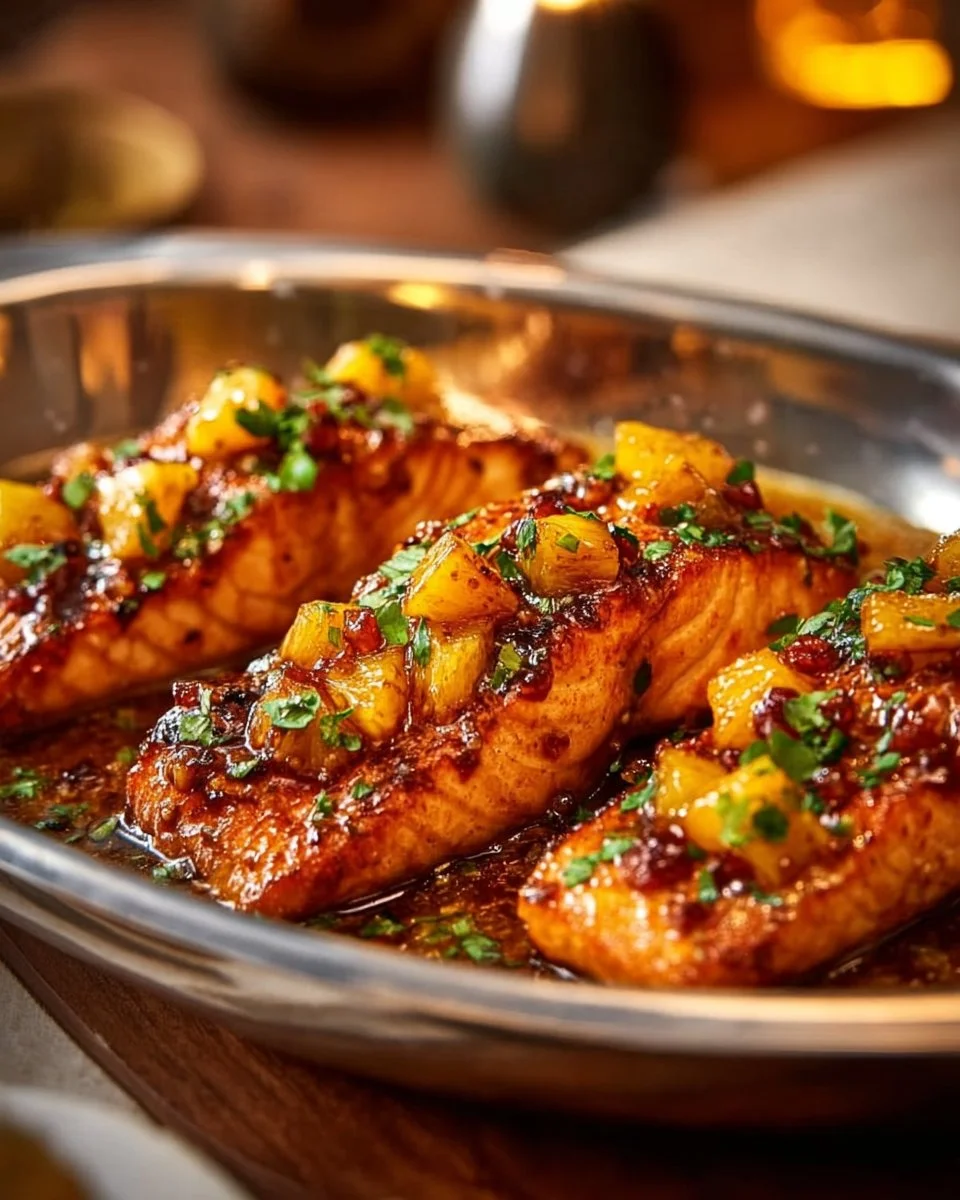
Pineapple Glazed Salmon is a bright, tropical take on a classic weeknight favorite, pairing tender baked salmon with a sticky-sweet pineapple glaze that caramelizes at the edges. If you enjoy sweet-savory finishes and easy oven cooking, this recipe is an approachable way to bring island flavors to your table; for another glaze-forward dish worth trying, see this Asian glazed orange chicken recipe for inspiration. This article walks through why this dish works, how to make it step by step, helpful tips, flavor twists, serving ideas, storage guidance, approximate nutrition facts, and answers to common questions.
why make this recipe
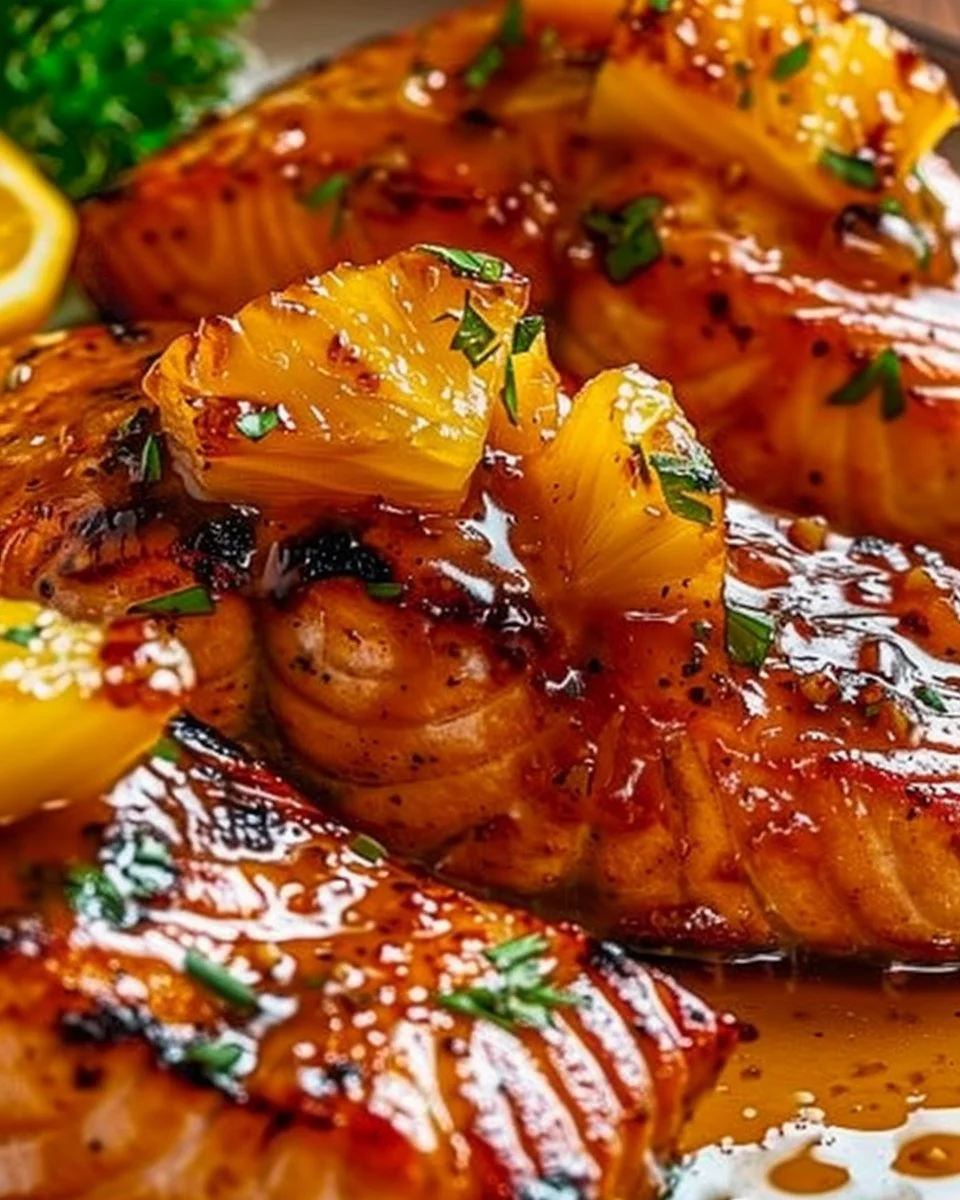
This Pineapple Glazed Salmon recipe shines because it’s fast, flexible, and full of contrast. The naturally rich, buttery flavor of salmon pairs beautifully with the bright acidity and sweetness of pineapple and brown sugar. The glaze both flavors and slightly caramelizes on the surface during baking, giving you a restaurant-style finish without complex techniques.
It’s also a practical weeknight recipe. The prep is short, the oven does most of the work, and cleanup is minimal. Salmon cooks quickly and the glaze comes together in one small bowl, making this a great choice when you want something impressive but simple.
This recipe is family-friendly and can be adjusted to suit picky eaters or adventurous palates. With a few pantry swaps you can adapt the glaze’s sweetness, saltiness, or heat. It’s a smart way to add more seafood to your meal rotation while delivering bright, memorable flavor.
how to make Pineapple Glazed Salmon
Follow these steps to make juicy, flavorful Pineapple Glazed Salmon that caramelizes on top and stays tender inside.
- Preheat your oven to 400 degrees Fahrenheit (200 degrees Celsius). Lightly grease a baking dish.
- In a small bowl, whisk together the brown sugar, soy sauce, rice vinegar, minced garlic, and grated ginger (if using) to create a glaze.
- Pat the salmon fillets dry with paper towels, rub with olive oil, and season with salt and black pepper.
- Place the salmon fillets skin-side down in the baking dish and spoon two-thirds of the glaze over them. Scatter diced pineapple around the salmon.
- Bake for 12 to 15 minutes or until cooked through. Optionally broil for 1 to 2 minutes for a caramelized glaze.
- Let rest for 5 minutes before serving. Garnish with parsley and serve warm.
Ingredients :
- 4 salmon fillets, approximately 6 ounces each
- 1 tablespoon olive oil
- 1/2 teaspoon salt
- 1/4 teaspoon black pepper
- 1 cup fresh or canned pineapple, diced and well drained
- 1/4 cup packed light brown sugar
- 2 tablespoons soy sauce
- 1 tablespoon rice vinegar
- 1 teaspoon minced garlic
- 1/2 teaspoon grated fresh ginger (optional)
- 1 tablespoon fresh parsley, chopped (for garnish)
Ingredient notes and substitutions:
- Salmon: Choose wild or farmed according to preference and budget. Look for even-thickness fillets so they cook uniformly. Skin-on fillets help hold the fish together and make flipping unnecessary.
- Pineapple: Fresh pineapple gives the brightest flavor, but well-drained canned pineapple works fine. If using canned, drain thoroughly to avoid watering down the glaze.
- Brown sugar: Light brown sugar provides molasses notes. For a lighter option, substitute coconut sugar or reduce the quantity slightly.
- Soy sauce: Use low-sodium soy sauce if you’re watching salt. If you need a gluten-free version, use tamari.
- Rice vinegar: Mild rice vinegar balances the sweetness. If unavailable, substitute white wine vinegar or a mild apple cider vinegar.
- Olive oil: Any neutral oil (canola, avocado) works if you prefer a lighter flavor.
- Ginger: Optional but recommended for warmth; powdered ginger may be used in a pinch—use about 1/4 teaspoon.
Pro Tips for Success Pineapple Glazed Salmon
- Pat the salmon dry: Removing surface moisture ensures the glaze adheres and the fillets brown properly rather than steam.
- Spoon glaze in layers: Reserve some glaze to add halfway through baking or to brush on just before broiling so the topping doesn’t over-sweeten early in the cook.
- Watch the broiler closely: If you broil for caramelization, stay within sight for the final 1–2 minutes—sugars can go from caramelized to burnt fast.
- Even cooking: If fillets vary in thickness, start the thickest pieces toward the center of the baking dish where heat is most consistent, or tent thinner pieces with foil briefly after cooking.
- Rest before serving: Let cooked salmon rest 3–5 minutes to redistribute juices so each bite stays moist.
- Taste and adjust glaze: Before coating the salmon, taste the glaze and tweak acidity (a little more rice vinegar), salt (more soy sauce), or sweetness (more brown sugar) to suit your palate.
Flavor Variations Pineapple Glazed Salmon
- Spicy-sweet pineapple glaze: Add 1–2 teaspoons sriracha or 1/4 to 1/2 teaspoon crushed red pepper to the glaze for a gentle heat that plays nicely with the sweetness.
- Citrus-pine glaze: Stir in 1 tablespoon fresh orange or lime juice to the glaze for brighter citrus notes that complement the pineapple.
- Herb-forward glaze: Add chopped cilantro or basil to the glaze and sprinkle more on top at serving for a fresher, garden-like flavor.
- Smoky pineapple glaze: Mix 1/2 teaspoon smoked paprika into the glaze or add a splash of liquid smoke for a subtle barbecue vibe.
- Tropical cilantro-lime: Replace parsley garnish with chopped cilantro and add 1 teaspoon lime zest to the glaze for a zesty finish.
Serving Suggestions Pineapple Glazed Salmon
- Rice bowls: Serve the glazed salmon over steamed jasmine or brown rice with a scoop of pineapple and some sautéed greens.
- Veggie-forward plate: Pair with roasted sweet potatoes, steamed broccoli, or sautéed snap peas to balance the meal with texture and color.
- Salad topping: Flake warmed salmon over a crisp salad with mixed greens, avocado, cucumber, and a light vinaigrette for a refreshing lunch.
- Tacos or lettuce wraps: Break the salmon into chunks and serve in corn tortillas or butter lettuce leaves, topped with cabbage slaw and a squeeze of lime for handheld enjoyment.
- Noodles: Toss soba or rice noodles in a light sesame dressing and top with slices of the glazed salmon and extra pineapple for a satisfying noodle bowl.
Storage and Freezing Instructions Pineapple Glazed Salmon
Short-term storage:
- Refrigerate: Let the salmon cool to room temperature no longer than two hours after cooking, then transfer to an airtight container. Store in the refrigerator for up to 3 days.
- Reheating: Reheat gently in a 275–300°F oven for about 8–12 minutes or until warmed through to avoid drying it out. A quick microwave reheat on low power is possible, but can make the fish less tender.
Freezing:
- Freeze whole fillets: Place cooled salmon fillets on a parchment-lined tray and flash-freeze until firm (1–2 hours). Transfer to a freezer-safe bag or container with plastic wrap to protect from freezer burn. Store up to 2 months for best quality.
- Thawing: Move the salmon to the refrigerator overnight to thaw slowly before reheating. Avoid thawing at room temperature.
- Texture note: Freezing can slightly alter the texture of cooked salmon; frozen leftovers are best used in salads, pastas, or casseroles where the texture change is less noticeable.
Nutrition Facts (Per Serving) — approximate
- Calories: 370 kcal
- Protein: 34 g
- Carbohydrates: 24 g
- Fat: 14 g
- Fiber: 1.5 g
- Sodium: 730 mg
These values are estimates based on the listed ingredients divided into four servings. Actual nutrition will vary with salmon type, precise portion sizes, and ingredient substitutions (for example, using low-sodium soy sauce will reduce sodium).
FAQ About Pineapple Glazed Salmon
How do I know when salmon is cooked through?
Salmon is cooked when it flakes easily with a fork and the flesh is opaque throughout. Internal temperature should reach 125–130°F for medium doneness or 145°F if you prefer it fully cooked according to USDA guidelines. Because salmon continues to cook slightly after removing it from heat, you can pull it from the oven just before it looks fully opaque for a juicier result.
Can I make the glaze ahead of time?
Yes—make the glaze up to 2 days ahead and refrigerate in a sealed container. Bring it to room temperature before brushing on the salmon, or warm it slightly to loosen. Keeping some glaze in reserve for basting or finishing will help maintain fresh, bright flavor after cooking.
Is canned pineapple okay to use?
Canned pineapple works fine, particularly if fresh fruit is not available. Make sure to drain it well and pat it dry to avoid extra liquid diluting the glaze. If canned pineapple is packed in syrup, rinse briefly and drain to reduce excess sweetness.
Can I use frozen salmon?
Frozen salmon can be used if thoroughly thawed and patted dry before seasoning. Thaw overnight in the refrigerator, then follow the recipe as written. If starting from frozen, avoid baking it directly frozen since it will cook unevenly and the glaze won’t adhere properly.
How can I make this recipe lower in sodium?
Swap regular soy sauce for a low-sodium soy sauce or tamari to cut the sodium significantly. You can reduce or omit the added 1/2 teaspoon of salt and taste the glaze before brushing so you control seasoning. Using fresh pineapple instead of canned packed in syrup and rinsing any canned ingredients can also help.
What side dishes pair best with this salmon?
Light, refreshing sides complement the sweet glaze best: steamed or stir-fried greens, coconut rice or jasmine rice, roasted vegetables like asparagus or bell peppers, and crisp slaws with tangy dressings. For a heartier plate, roasted sweet potatoes or a warm grain salad work well too.
Final Thoughts
Pineapple Glazed Salmon is an easy, flavorful way to add something special to your weeknight menu. It balances sweet, salty, and tangy elements with a quick bake that suits busy schedules. Whether you stick to the classic glaze or try one of the suggested variations, the method is forgiving and adaptable. With a few smart swaps and these tips, you can tailor the dish to your family’s tastes and dietary needs. Enjoy the bright flavors and simple elegance of this tropical-inspired salmon.
Print
Pineapple Glazed Salmon
- Total Time: 30 minutes
- Yield: 4 servings
- Diet: Pescatarian
Description
A bright, tropical take on a classic weeknight favorite, pairing tender baked salmon with a sticky-sweet pineapple glaze.
Ingredients
- 4 salmon fillets, approximately 6 ounces each
- 1 tablespoon olive oil
- 1/2 teaspoon salt
- 1/4 teaspoon black pepper
- 1 cup fresh or canned pineapple, diced and well drained
- 1/4 cup packed light brown sugar
- 2 tablespoons soy sauce
- 1 tablespoon rice vinegar
- 1 teaspoon minced garlic
- 1/2 teaspoon grated fresh ginger (optional)
- 1 tablespoon fresh parsley, chopped (for garnish)
Instructions
- Preheat your oven to 400°F (200°C). Lightly grease a baking dish.
- Whisk together the brown sugar, soy sauce, rice vinegar, minced garlic, and grated ginger (if using) in a small bowl to create a glaze.
- Pat the salmon fillets dry with paper towels, rub with olive oil, and season with salt and black pepper.
- Place the salmon fillets skin-side down in the baking dish and spoon two-thirds of the glaze over them. Scatter diced pineapple around the salmon.
- Bake for 12 to 15 minutes or until cooked through. Optionally broil for 1 to 2 minutes for a caramelized glaze.
- Let rest for 5 minutes before serving. Garnish with parsley and serve warm.
Notes
For best results, pat the salmon dry before seasoning. Feel free to adjust the glaze’s sweetness or saltiness to suit your taste.
- Prep Time: 15 minutes
- Cook Time: 15 minutes
- Category: Main Course
- Method: Baking
- Cuisine: Asian